A pool can be the best part of a house. It can also be the part you know least about on closing day. This guide gives you a plain plan for your first 30 days as owner of a home with a pool in North Texas.
Start with the sale itself. Then work through safety, equipment, water and a care routine. You do not need to learn everything at once. You need to fix what is unsafe, learn what you own, and set up care before the water changes.
Does a Texas home inspection cover the pool?
Not by default. Texas Real Estate Commission rules list swimming pools, spas and hot tubs as optional systems. Under 22 TAC 535.233, an inspector is not required to inspect those systems. If the inspector agrees to inspect them, the rule says what to report.
When an inspector does look, the rule calls for reporting on items such as:
- a single blockable main drain, which is a potential entrapment hazard
- a pump motor, blower or other electrical equipment that lacks bonding
- absent or deficient safety barriers
- absent or failed ground-fault circuit interrupter protection
- water leaks in above-ground pipes and equipment
- problems with filters, gauges, pumps, motors, controls and sweeps
- lighting fixtures, drains, skimmers and valves
- surfaces, tile, coping and decks
So check your inspection contract. Ask whether the pool is in scope, and read the report for the word “pool.” If it is out of scope, ask for a separate pool and equipment check. Our equipment inspection service looks at pumps, filters, heaters, valves, plumbing connections, timers and controls, and gives repair and replacement recommendations. It is not a legal or structural inspection of the shell.
A shell, deck or leak concern needs a specialist. I will not guess at those here. Our bucket test guide covers a basic check for water loss.
What should I ask the seller?
Ask for paper first. Records tell you what you are buying. Use this list.
| Ask for | Why it helps |
|---|---|
| Equipment brands and models | Lets you find manuals and parts |
| Install or replacement dates | Gives you a starting age for each part |
| Repair and service records | Shows repeat problems |
| Warranty papers | Shows what may still be covered |
| Permit details for pool or equipment work | Shows whether work was approved by the city |
| Name of the pool company | You can ask what it saw and fixed |
| Any known leaks, freeze damage or green water events | Lets you plan an inspection |
| Safety items such as alarms and covers | Tells you what stays and what you must buy |
Ask for answers in writing when you can. If the seller does not know, write that down too. You can then use an inspection to fill the gaps.
What are the first 30 days?
Work in this order: safety, equipment, water, routine. The table gives the plan, and the sections after it explain each step.
| When | What to do |
|---|---|
| Days 1 to 3 | Safety walk-through, find the shutoffs, take photos, keep children and pets away from the water until safety is checked |
| Days 4 to 7 | Equipment walk-through, pool and equipment inspection, test the water |
| Week 2 | Read manuals, set pump timer plan, learn the filter gauge, choose a care routine |
| Week 3 | Fix the items the inspection found, in order of safety first |
| Week 4 | Review the water results, confirm your routine, plan for the next season |
If you closed in the middle of summer or just before a freeze, move the water and freeze steps up. Our North Texas pool calendar shows what each month asks of you.
How do I do a safety check in the first days?
Check the barrier, the gates, the drains and the electrical protection before anyone swims. CPSC advises layers of protection, including barriers that keep an unsupervised child from reaching the water. It names door alarms, pool covers and self-closing, self-latching devices on fence gates and doors that open onto the pool.
Walk the property and note each point.
- Barrier and gates. Do the gates close and latch on their own? Are there gaps a child could use?
- Doors to the pool. If a door from the house opens to the pool, is there an alarm or another layer?
- Drain covers. CPSC says to confirm that drain covers meet federal safety standards, and to ask your pool service provider about safer covers if you are unsure. Keep children away from drains and openings. A broken or missing cover is a reason to stay out of the pool.
- Electrical protection. Do the outlets near the pool have working GFCI protection? Is the equipment bonded? Test the GFCI button as the maker directs. If something looks wrong, call a qualified pro. Do not attempt wiring.
- Water watcher. CPSC advises naming an adult water watcher who is not reading, texting or otherwise distracted.
Your city may have its own barrier or permit rules. I did not find a verified local rule to quote for each town, so ask your city and read the seller’s permit papers.
What do I check on the equipment pad?
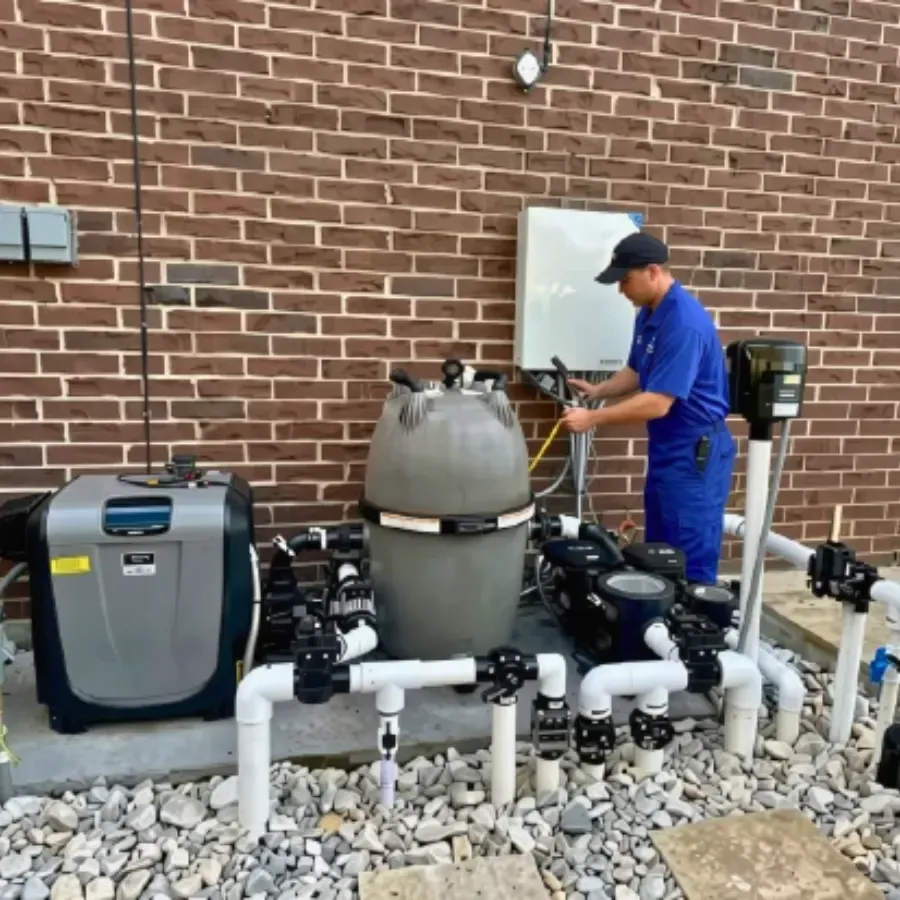
Find every piece of equipment and write down what you see. The equipment pad is the cluster of pump, filter, heater and controls, often beside the house. Take photos of every label and gauge. Then look for these.
- Pump. Note the brand and type. A variable speed pump can be set to different speeds. Listen for grinding and look for drips or air in the pump lid. Check that the pump basket is clean.
- Filter. Is it cartridge, sand or DE? Read the pressure gauge and write down the number when the filter is clean. That clean number is your baseline.
- Heater. Find it, note the type, and ask the seller when it last ran.
- Salt system. If the pool uses salt, find the cell and the control box. Salt does not make a pool maintenance free.
- Controls and timers. Learn what runs on a schedule. Find the main breaker and the pool breakers.
- Valves and plumbing. Look for leaks at unions, valves and fittings. Learn which handle does what before you need it in a hurry.
ENERGY STAR notes that a timer matters for cost. It says running the filter 6 hours instead of 24 cuts energy use by 75 percent. That does not mean you should cut your run time. A pool needs enough circulation to stay clear. Ask a pro to set a plan for your pool and your pump.
To judge age, use ranges, not guesses. Our pool equipment lifespan guide gives the ranges I found and where each one comes from.
How do I get the water right?
Test the water on day one, then test on a steady schedule. CDC recommends pH 7.0 to 7.8 and at least 1 ppm chlorine in a pool, with at least 2 ppm if you use chlorine products that contain stabilizer. CDC advises testing chlorine and pH at least twice a day for home pools, and more often when the pool gets heavy use.
A test strip works for a quick look, but a drop kit or a lab test gives a better read. Learn these terms on day one:
- Free chlorine is the chlorine that is ready to sanitize.
- pH shows how acidic or basic the water is.
- Cyanuric acid is a stabilizer that protects chlorine from sun.
- Total alkalinity helps hold pH steady.
- Calcium hardness affects scale and etching.
Our water chemistry chart gives target ranges.
If the pool arrives green or cloudy, do not start with a pile of products. Our guide to clearing a green pool explains the order of steps. Follow each product label.
Handle chemicals with care. CDC says to store each pool chemical separately in its own place, keep chemicals in their original labeled containers, keep them dry and below 95 degrees Fahrenheit, and never mix chlorine products with acid. Lock chemicals away from children and pets. Pick a cool, dry spot.
Who should care for the pool?
Pick a routine before the first hot week. You can do it yourself, or you can hire weekly service. The right answer depends on your time and your comfort with chemicals.
If you hire, use a short checklist. Our hiring checklist covers insurance, how to look up a TDLR license for electrical work, and what to ask before you sign. Marina Pool Services is insured through IPSSA.
Marina’s weekly service covers water balance, emptying baskets, backwashing filters as needed, and vacuuming and brushing as needed. See weekly pool service in Grapevine for details. We quote each job.
What about freezes and storms?
Learn your freeze plan in the first month. DFW Airport’s average first freeze is November 22 and its average last freeze is March 12, per the National Weather Service. Freezes outside that window do happen. The earliest first freeze on record was October 22, 1898.
Ask the seller whether the pool has freeze protection, such as a sensor and a controller setting, and test it before cold weather. Hayward says its controller’s freeze protection is normally adequate for areas with infrequent freezing that does not dip far below 32 degrees Fahrenheit. For other conditions, it says to shut the pool down per normal winter procedures. Marina’s Freeze Guard service covers freeze protection and winterization for vulnerable equipment. Our freeze protection guide explains the options.
What mistakes do new pool owners make?
These are the common ones. All of them are avoidable.
- They assume the home inspection covered the pool.
- They skip the safety walk and swim first.
- They mix chemicals or store them in a hot garage.
- They add products without testing the water.
- They turn off the pump to save money, then see the pool go green.
- They ignore a small drip or a new noise.
- They wait for a freeze to learn where the shutoffs are.
- They hire on price alone without checking scope or insurance.
Avoid those and your first month goes much easier.
What should I bring to the first inspection?
Bring your photos, your questions and your goals. Tell the inspector what you want to know: how old the parts seem, what needs work now, what can wait, and what to plan for next year. A good report is in plain words. It tells you what each part is, what shape it is in and what the options are.
Marina Pool Services is a family-owned, locally operated company based in Grapevine, with more than 20 years of combined pool experience, and it works on residential pools. It services and installs Hayward, Pentair, Jandy and Raypak equipment. See our equipment repair page if the inspection finds something to fix.
Next step
Book a pool equipment inspection before or just after closing. Call (817) 896-1120 or send the quote form at /contact.
Frequently asked questions
Does a Texas home inspection include the pool?
Not by default. Under Texas Real Estate Commission rules, an inspector is not required to inspect swimming pools, spas or hot tubs. If an inspector agrees to, the rule lists items to report. Ask in writing whether the pool is included, and plan a separate pool and equipment check if it is not.
What should I check first when I buy a house with a pool?
Check safety first. Look at the barrier and gates, the drain covers, and whether electrical protection works. CPSC advises layers of protection, such as self-closing, self-latching gates and door alarms, and says to confirm drain covers meet federal safety standards. Do these before you let anyone swim.
When should I get a pool equipment inspection?
Ideally before closing, while you can still ask the seller to fix items or adjust the deal. If that is not possible, do it in your first week as owner. Equipment age, noise and leaks are easier to deal with when you know them early, and the findings help you plan repairs in order.
How often should I test the water in a new home pool?
CDC says to test chlorine and pH at least twice a day for home pools, and more often with heavy use. It recommends pH 7.0 to 7.8 and at least 1 ppm chlorine, or 2 ppm if you use stabilized chlorine. Many owners hire weekly service. Follow product labels and your equipment manual.
What documents should I ask the seller for?
Ask for equipment manuals, brands and install dates if known, repair and service records, any warranty papers, details on any permits, and the name of the company that cared for the pool. Keep what you get in one folder. If the seller has none, note that and rely on an inspection.
Should I change the pool service company after I buy?
You do not have to switch on day one. Ask the seller who serviced the pool, and ask that company what it did. Then decide. If you hire a new company, use a short list of questions about scope, insurance and license for any electrical work.
Pool terms on this page
Sources
- Texas Real Estate Commission rule: 22 TAC 535.233, optional systems
- CPSC: Safety tips for pool season
- CDC: Home Pool and Hot Tub Water Treatment and Testing
- CDC: Pool Chemical Safety
- ENERGY STAR: Pool Pumps
- TDLR: License Data Search
- NWS Fort Worth: DFW freeze summary
Written by Marina Pool Services and checked against the sources above on October 21, 2026. City rules and product guidance change, so check the linked page before you act. Follow product labels for any pool chemical.