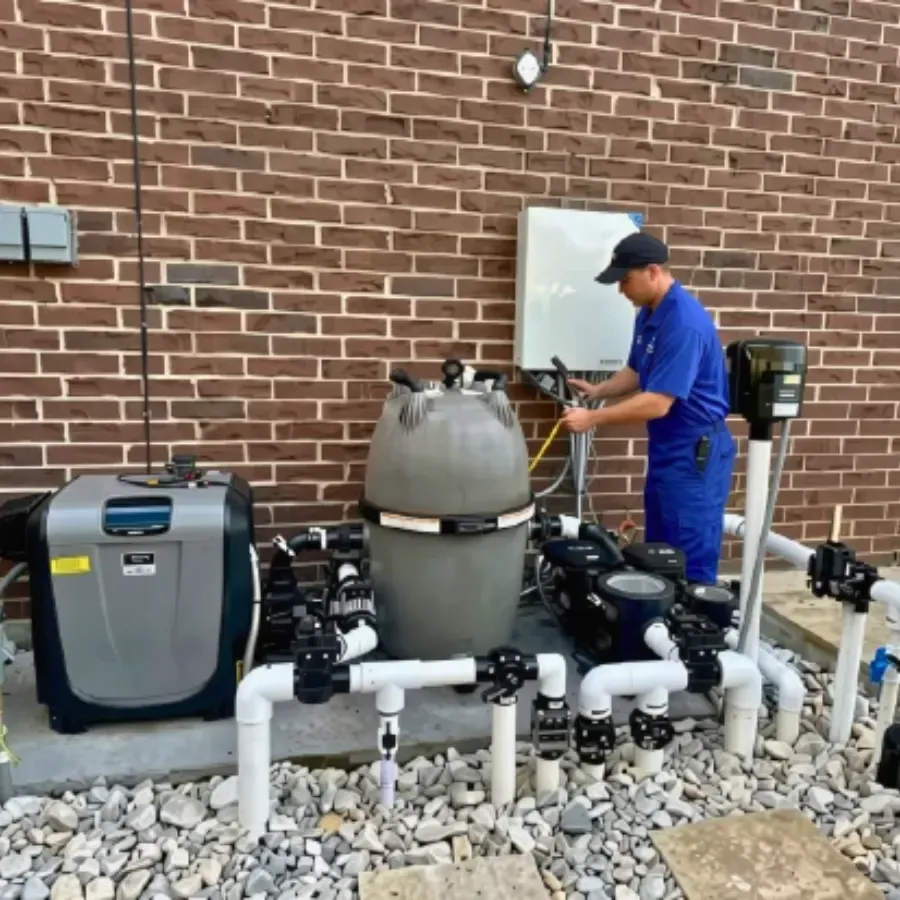
Hiring a pool company is a trust decision. Someone will handle chemicals, open your equipment pad and sometimes touch your wiring. This checklist helps you ask the right questions and check the answers yourself.
Texas treats pool work in two parts. Some of it is licensed. Some of it is not. Knowing which is which makes every call with a pool company easier. Where we say “I found,” we read the agency pages listed under Sources and did not find a rule. That is different from a rule that says “no license.”
What does Texas license for pool work?
Texas licenses electrical work, and that includes electrical work on pool equipment. Texas Occupations Code Chapter 1305 says a person or business may not perform or offer to perform electrical work or residential appliance installation unless they hold an appropriate license under that chapter. TDLR’s FAQ says it plainly: anyone who performs electrical work in Texas must be licensed, subject to listed exemptions.
The same chapter defines two terms that matter to pool owners.
- A pool-related electrical device is equipment for a pool that is installed as a unit, is directly connected to an electrical circuit, performs a specific function, and uses single-phase power of 240 volts or less. A pump, a heater and a salt system can fit this idea.
- Pool-related electrical maintenance is electrical work limited to connecting or disconnecting such a device from an existing circuit, other than by plugging or unplugging it.
TDLR describes the Residential Appliance Installer as a licensed individual who performs electrical work limited to residential appliance installation. A holder of another TDLR electrical license who wants to install appliances must work for a licensed electrical contractor. A Residential Appliance Installation Contractor needs its own installer license or a licensed installer assigned as the installer of record. The TDLR pages explain the license types.
TDLR’s FAQ does not discuss pool electrical work by name. So do not assume one license title fits every pool job. Ask the company which license covers your job, then check it.
What does Texas not license?
I found no Texas state license program for weekly pool cleaning, skimming, brushing or water testing on a single-family home pool. TDLR’s program list covers electricians, air conditioning and other trades, and pool service is not on it. This is an absence of evidence. I did not find a statute that says “no license needed.” Call TDLR at 800-803-9202 if the answer matters to your decision.
A city can still add rules. TDLR’s FAQ says the state does not require residential appliance installation permits, but a city or region may require permits, fees or inspections. Ask the company whether your job needs a city permit and who pulls it.
Public pools and spas follow separate health department rules. Those rules are for public sites, not a backyard pool.
Gas heater plumbing is a separate trade with its own rules. I did not open the plumbing statute, so ask any company who does the gas line work and which license covers it.
| Type of work | State license? | What to do |
|---|---|---|
| Weekly cleaning and water care | I found none | Ask about insurance and scope |
| Wiring or connecting a pump, heater or light | Yes, TDLR electrical license | Get a license number and look it up |
| Gas line work on a heater | Plumbing rules apply | Ask who does it and which license covers it |
| Equipment swap with a plug-in cord | Depends on the job | Ask which license applies |
| Permits for equipment work | City decides | Ask your city and the company |
How do I check a Texas license?
Use the TDLR license data search. The page lets you search by license type, license number, city, county or ZIP code. It also has a field for a person’s name or a business name. It lists active licenses only.
Follow these steps.
- Ask the company for the license number and the name it was issued under.
- Open the TDLR search and choose the electrician program.
- Type the person or business name, or the number.
- Match the name on the license to the name on your quote and contract.
- If you find nothing, call TDLR customer service at 800-803-9202 before you sign.
Some people are exempt. TDLR’s exemption page lists residential appliance dealers, manufacturers and their authorized designees who do electrical work while repairing an existing appliance. It also exempts a person who does electrical work on a dwelling they own and live in. Those exemptions do not stretch to other homes. Whether a pool repair shop fits an exemption is a legal question. Do not guess. Ask the company to explain which license or exemption covers your job.
What insurance should a pool company carry?
Ask for a certificate of insurance, then check it. A pool company works around your home, your equipment and your water. A mistake can cost real money, so you want the company’s insurance to answer first, not your homeowner’s policy.
Texas Department of Insurance (TDI) explains what a certificate is. It must match the policy. It cannot give new coverage. A certificate holder may ask for a copy of the policy. TDI’s consumer advice for contractors is to ask for the certificate, then call the insurance company to confirm the policy is valid.
Here is a short insurance checklist.
| Ask or check | Why it matters |
|---|---|
| Certificate of insurance with the company’s exact name | The name should match the quote and contract |
| General liability insurance listed | This is the policy that answers for damage on the job |
| Policy dates that have not expired | An old certificate shows nothing about today |
| Insurer name and agent phone number | Lets you call and confirm the policy |
| Workers’ compensation status | Optional for most Texas private employers, but worth asking |
| Membership in a trade group, if claimed | Ask what it covers and who provides the insurance |
TDI says workers’ compensation is not required for most private employers in Texas. If a company says it carries it, you can ask which insurer. If you cannot tell, TDI lets you email coverage.verification@tdi.texas.gov with the employer’s name, address and date of injury. TDI says a representative replies within one business day.
Marina Pool Services is insured through IPSSA, the Independent Pool and Spa Service Association. Use the same questions on Marina that you would use on anyone else: ask for the certificate and call to confirm it.
What should I ask before I sign?
Ask questions that make the company explain its work in plain words. A clear answer is a good sign. Vague answers are a warning.
- What exactly does each weekly visit cover? A typical scope names water testing, basket emptying, filter backwashing as needed, vacuuming and brushing as needed. Ask what is not included.
- How do you handle repairs? Ask whether repairs are quoted first, who approves them, and how the company explains what failed.
- What brands do you work on? Ask whether the company services your equipment brand. Marina services and installs Hayward, Pentair, Jandy and Raypak equipment.
- Who does electrical or gas work? Ask for the name and license number of the person doing it.
- What happens if I need to stop service? Ask about notice, in writing.
- Will you give an estimate first? A free estimate is common for many services, but terms differ by company. Ask if it is free and what it includes.
- Who is my contact? You should know who to call and how fast the company usually answers.
Do not ask a company to guess at a price on the phone for a job it has not seen. Honest companies quote after they look. If a company gives a firm number without seeing the equipment, ask what the number assumes.
How do I judge chemical handling and safety?
Ask how the company stores and handles chemicals. CDC says to store each pool chemical separately in a dedicated place, keep chemicals in their original labeled containers, and keep incompatible chemicals apart. CDC also says to keep chemicals dry, below 95 degrees Fahrenheit, and away from direct sun. Those rules are written for public pools, but the logic is the same for a company that carries chemicals in a truck.
You do not need to inspect a truck. You can ask three questions.
- Do you keep chlorine and acid apart?
- Do you follow the product label?
- What do you do if a chemical spills on my deck?
A calm, specific answer shows habit. A shrug does not.
At your own pool, keep the same rule. Store chemicals in a locked, dry spot away from children and pets, and never mix products. If your pump room has no ventilation, tell the company. They should know before they work there.
What are the red flags?
Most bad experiences share the same signs. Look for these before you hire.
- The company will not give a license number for electrical work.
- It will not show a certificate of insurance, or the certificate is out of date.
- It asks for full payment up front for work not yet done.
- It cannot explain the scope in plain words.
- It pushes to replace a large piece of equipment with no test results, photos or reasons.
- It will not put the quote in writing.
- It says “no permit needed” without checking with your city.
One red flag is a reason to ask more. Three are a reason to call someone else.
How do I compare two quotes?
Compare scope first, then price. Two quotes that look different may cover different work. A lower number can leave out chemicals, filter cleaning or repairs. A higher number can include more visits or a larger scope.
Use the same list on both quotes.
| Line to compare | Quote A | Quote B |
|---|---|---|
| Visits per week or month | ||
| Chemicals included or billed apart | ||
| Filter and basket care | ||
| Repairs: how they are quoted | ||
| Start and stop terms | ||
| Insurance shown | ||
| License shown for electrical work |
Fill the table in. The blanks tell you what to ask.
Ask a company to explain how it handles a green pool, a pump failure or a freeze. Those are the moments when you learn how a company works. Our weekly pool service guide explains what a normal visit should include, and our cost guide explains how to read a quote without leaning on one number.
What does a good first call sound like?
A good first call is short and clear. The company asks about your pool size, equipment and what is wrong. It tells you how it quotes and what the next step is. It does not rush you.
Have these ready before you call.
- Your address and city
- Pool type and rough size, if you know it
- Brands on your equipment pad
- What you see: green water, noise, a leak, a tripped breaker
- How soon you need help
Take a photo of your equipment pad and the pressure gauge. It helps the company plan and helps you remember what you saw.
For safety, if you smell gas, see sparks or find water near live wiring, turn off power at the breaker only if you can do it safely and without touching wet equipment. Then call a qualified pro. Do not try electrical repairs yourself. This guide gives no wiring steps on purpose.
What does this mean for a Grapevine pool owner?
If you live in Grapevine or nearby, you can apply the same checklist to any company, including ours. Look up the license for electrical work. Ask for the certificate of insurance. Ask for the scope in writing. Compare at least two quotes by scope first.
Marina Pool Services is a family-owned, locally operated company based in Grapevine, with more than 20 years of combined pool experience. It serves residential pools. Our weekly service covers water balance, emptying baskets, backwashing filters as needed, and vacuuming and brushing as needed. We quote each job and do not post prices.
Our equipment repair service page and our city pages describe where we work. If you are unsure whether a repair needs a licensed electrician, ask us. We will explain what we can and cannot do on your job.
Next step
Read about weekly pool service in Grapevine, then call (817) 896-1120 or use the quote form at /contact. Bring this checklist and ask us the same questions you ask anyone else.
Frequently asked questions
Does Texas require a license for pool cleaning?
I found no Texas state license program for weekly pool cleaning or water chemistry on a home pool. That is an absence of evidence, not a quoted rule. Confirm with TDLR at 800-803-9202. Cities can add their own rules, and electrical work on pool equipment does need a license.
Who can legally wire or connect a pool pump or heater in Texas?
Texas Occupations Code Chapter 1305 says a person or business may not perform electrical work or residential appliance installation without an appropriate license. TDLR names the Residential Appliance Installer as one path. Exemptions exist, so ask the company which license covers the job and look it up.
How do I check a Texas electrical license?
Use the TDLR license data search. You can search by name or by business name, and it lists active licenses only. If you cannot find the person, TDLR customer service can help at 800-803-9202. Do this before you sign, and match the name on the license to the name on the quote.
What should a pool company's certificate of insurance show?
It should name the company, list a general liability policy, and show dates that have not expired. TDI says a certificate only summarizes a policy and gives no new coverage. Ask for it, then call the insurer or agent to confirm the policy is active.
Is workers' compensation required for Texas pool companies?
TDI says most private Texas employers may choose whether to carry workers' compensation. So a company without it may not be breaking a rule. You can ask, and you can check a company's status through TDI's coverage verification email. Decide how much that matters to you.
What is a red flag when hiring a pool company?
Watch for a company that will not name a license number for electrical work, will not show insurance, asks for full payment up front, or cannot explain the scope in plain words. Also watch for pressure to replace equipment without any test results or photos of the problem.
Pool terms on this page
Sources
- TDLR: Electricians Frequently Asked Questions
- Texas Legislature: Occupations Code Chapter 1305, Electricians
- TDLR: Electrical exemptions
- TDLR: License Data Search
- Texas Department of Insurance: Certificates of Insurance FAQ
- Texas Department of Insurance: Workers' compensation coverage verification
- CDC: Pool Chemical Safety
Written by Marina Pool Services and checked against the sources above on October 21, 2026. City rules and product guidance change, so check the linked page before you act. Follow product labels for any pool chemical.