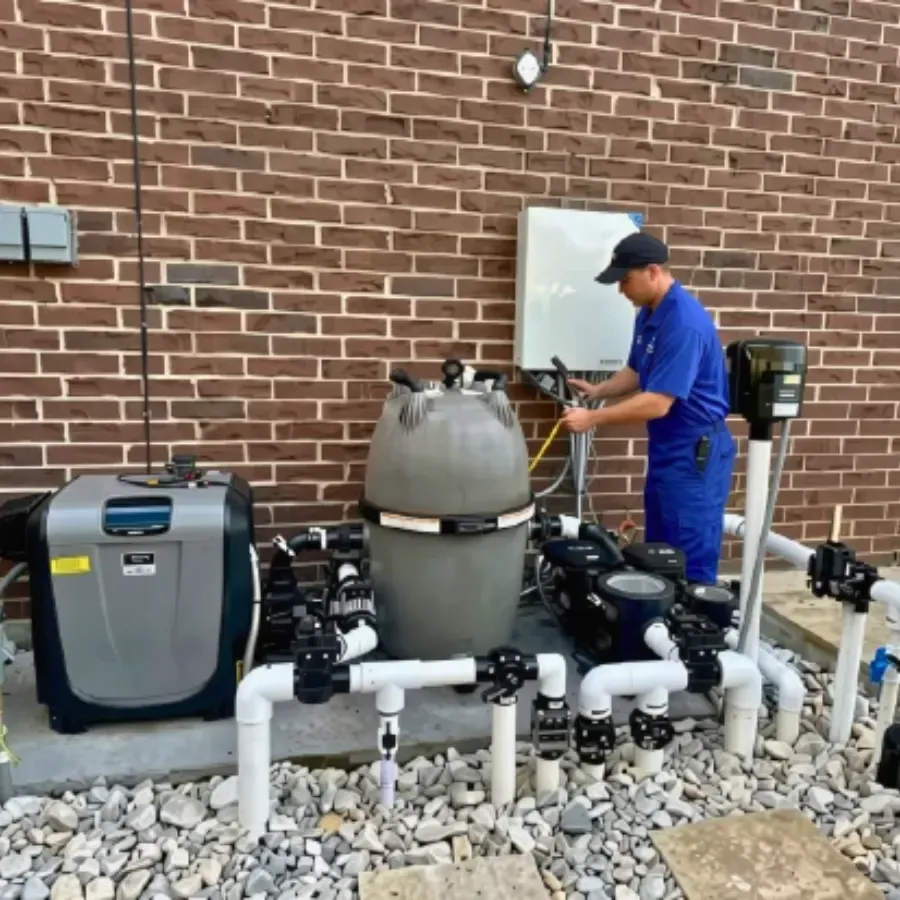
Why does my pool pump lose prime?
A pump loses prime when it pulls air instead of water. Priming means the pump and its basket are full of water, so the pump can move it. Air in the suction side breaks that flow. Leslie’s says “pool pumps must be air tight,” and a leak will make the pump “suck in air and become problematic.”
The fix is to find where air gets in. This checklist goes from the easiest check to the hardest.
What should I do first?
Turn the pump off before you open anything. A pump that runs dry can overheat and damage its seal. Then follow the list.
- Turn the pump off at its switch or breaker.
- Look at the water level.
- Empty the skimmer and pump baskets.
- Inspect the pump lid and O-ring.
- Refill the pump basket with water, close the lid, and restart.
If the pump holds prime after these steps, you found it. If not, move on to the next sections.
Is the water level too low?
Low water is the simplest cause. Leslie’s says water should sit about halfway up the mouth of the skimmer. If the level drops below that, the skimmer can pull air into the line. Texas heat speeds evaporation, so a pool can drop quickly in summer. Top the pool up if needed.
Also check the skimmer weir gate. Leslie’s notes that a weir gate stuck in the “up” position can cause the pump to draw air.
Are the baskets full?
A full basket blocks flow and can starve the pump. Leslie’s says to empty the pump strainer and skimmer baskets, then check for loose connections and air leaks. Our glossary has short entries on the pump basket and skimmer basket.
Is the lid or O-ring bad?
The lid is the most common leak point. Leslie’s says to “check your pump lid first to ensure there’s a tight seal, and replace the O-ring if necessary.” A dry, flat or cracked lid O-ring lets air in.
Look for these signs:
- Bubbles in the pump basket when the pump runs
- A lid that does not sit flat
- An O-ring that looks cracked, flat or stretched
- Dirt or sand on the O-ring seat
Clean the seat. Make sure the O-ring is the right size for your model. Leslie’s advises keeping O-rings well lubricated with a pool-safe lubricant.
Where else can air get in?
If the lid is fine, check the rest of the suction side. This table lists places Leslie’s names, and what to look for.
| Place | What to look for |
|---|---|
| Where the pipe enters the pump | Loose union or cracked fitting |
| Valve stems on suction valves | Dried or worn stem O-rings |
| Suction plumbing before the impeller | Cracks, loose or old fittings |
| Other O-rings and gaskets | Flat or cracked rings |
| Skimmer and weir gate | Stuck gate, low water |
Suction-side leaks often show up as bubbles returning to the pool from the return jets. They can also cause rumbling noises. See the glossary entries on air leak, priming and cavitation.
How do I pinpoint a small leak?
Leslie’s describes a simple trick: spray shaving cream on the areas above with the pump running. An air leak will draw the foam inward and leave a dimple. Use this only on parts you can reach safely, and keep your hands clear of moving parts. Wipe off the foam after.
Could the leak be on the pressure side?
Yes. Leslie’s says a leak on the pressure side can cause the pump to lose prime every time the system turns off. Look for drips or wet spots at fittings after the pump, at the filter and at unions. A leak that shows only when the pump runs is a clue. A slow leak at a pump seal is another. Leslie’s lists the impeller housing O-ring and the shaft seal as common sources. See shaft seal.
What if I still cannot find it?
Some leaks hide in glued pipe, below the deck or behind equipment. These are hard to find by eye. A pro can pressure-test lines and trace the path. Our pool leak bucket test guide can help you tell a water loss problem from a pump problem.
A pump that keeps losing prime and runs dry can damage the pump. Turn it off until the problem is fixed.
What should I avoid doing?
Do not run the pump dry to see if it primes. Do not overtighten the lid, which can crack it or pinch the O-ring. Do not use sealant on a fitting you cannot see. And do not ignore the problem. A pump that keeps pulling air moves less water, so the filter and the sanitizer work less well.
How does this connect to the filter?
A pump that loses prime moves less water. That can show up as low filter pressure and poor cleaning. Our post on high filter pressure explains how to read the gauge. A drop below your normal reading can point to an air leak, a blocked basket or a worn impeller.
What will a pro do?
A pro will check the lid, baskets and fittings, then test the pump and plumbing. Marina’s pump page lists inspection and diagnostics, repair and service, and replacement and installation. Marina services and installs Hayward, Pentair, Jandy and Raypak equipment. Compare repair choices in our pool equipment repair guide.
Next step
If your pump keeps losing prime, read about pool pump repair. Then call (817) 896-1120 or use the quote form at /contact.
Frequently asked questions
Why does my pool pump keep losing prime?
Air is getting into the suction side of the system. Common sources are a worn pump lid O-ring, a low water level, a full basket, or a loose fitting or valve stem on the suction line. Work through the checklist from simplest to hardest.
How do I find an air leak at the pump?
Leslie's suggests checking the pump lid first, then where the pipe enters the pump, valve stems on suction valves, and other suction-side plumbing. It also describes spraying shaving cream on joints, where an air leak pulls the foam in and leaves a dimple.
How high should the pool water be?
Leslie's says water should sit about halfway up the mouth of the skimmer. If it drops below the opening, the pump can pull air.
Can a leak on the pressure side cause lost prime?
Yes. Leslie's notes a pressure-side leak can cause the pump to lose prime whenever the system shuts off. Look for drips at fittings after the pump.
When should I call a pro?
Call if the checklist finds nothing, if the leak looks to be in buried or glued pipe, or if the pump runs dry. Running a pump without water can damage it.
Pool terms on this page
Sources
Written by Marina Pool Services and checked against the sources above on October 21, 2026. City rules and product guidance change, so check the linked page before you act. Follow product labels for any pool chemical.