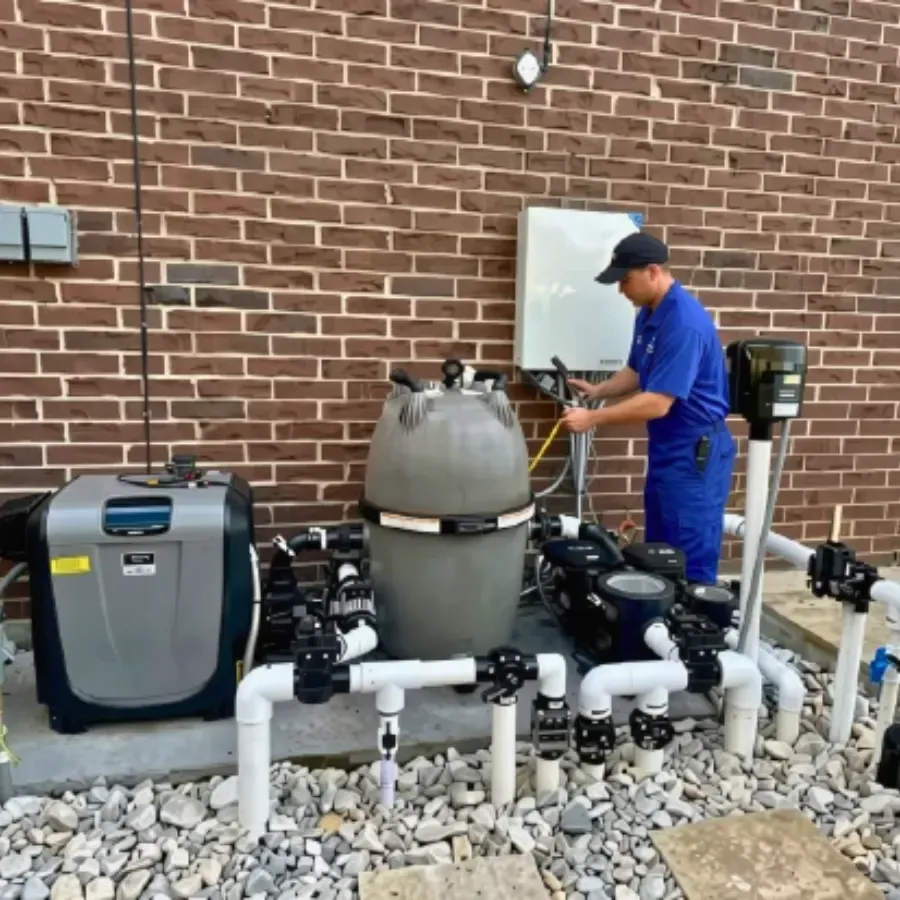
Keller water hardness is listed at 76.5 to 175 ppm in the city’s 2024 drinking water quality report. Keller buys its water from Fort Worth, and Fort Worth’s 2025 report lists 108 to 150 ppm. This post explains what the numbers mean for pool chemistry. Figures are as of October 2026.
Where does Keller’s water come from?
Keller’s 2024 report says the city purchases its water from the City of Fort Worth. Fort Worth draws from Lake Worth, Lake Bridgeport, Richland Chambers Reservoir, Cedar Creek Reservoir, Lake Benbrook and the Clear Fork Trinity River.
The report lists chloramines as the disinfectant. Keller’s 2024 level was 2.83 ppm, with a range of 1.00 to 3.60 ppm. This is a drinking water disinfectant. It is not a pool chlorine reading.
What do the reports say about hardness, pH and alkalinity?
The Keller report shows Fort Worth’s sampling results. Fort Worth also publishes a newer report for 2025.
| Reading | Keller 2024 report | Fort Worth 2025 report |
|---|---|---|
| Total hardness as CaCO3 | 76.5 to 175 ppm | 108 to 150 ppm |
| Hardness in grains | 5 to 10 grains per gallon | 6 to 9 grains per gallon |
| pH | 7.8 to 8.5 | 7.8 to 8.5 |
| Total alkalinity as CaCO3 | 73.3 to 149 ppm | 99.7 to 124 ppm |
| Total dissolved solids | 156 to 289 ppm | 182 to 244 ppm |
| Calcium | 23.6 to 61.5 ppm | 37.6 to 48.1 ppm |
The ranges are wide. Tap water changes over the year, so your fill water can differ from week to week.
How do I read the ranges?
The Keller report states that ppm means parts per million, which equals milligrams per liter. It also lists grains per gallon as a unit of hardness. A range runs from the lowest to the highest result in that year. The 2024 Keller range is wider than Fort Worth’s 2025 range, but both sit in the same band of 5 to 10 grains per gallon. A single test at your tap can land anywhere inside the range.
Why does tap water matter for a Keller pool?
Tap water is what you add when you fill and top off. Evaporation removes water but leaves minerals behind, so a pool can drift well past the tap numbers. The pool test is the real reading.
Check these three first:
- Calcium hardness: the mineral level that affects plaster and equipment.
- pH: tap water in both reports can sit above 8, so pH can rise after a fill.
- Total alkalinity: it steadies pH, and a fill moves it.
Our pool water chemistry chart shows how the readings fit together.
What does mineral buildup mean for a salt cell?
A salt chlorine generator makes chlorine from salt in the pool water. Minerals can collect on the salt cell as scale. Many systems warn you when this happens. Scale depends on pH, alkalinity, calcium hardness and temperature together, so tap water alone does not decide it.
Our saltwater vs chlorine guide covers upkeep. If you have a salt system and see a scale warning, test the water first. Then have the cell inspected. Marina Pool Services installs and services salt systems. See the salt water system page.
What should a Keller pool owner do?
| Step | Why |
|---|---|
| Test the pool before and after a large fill | Shows what the fill changed |
| Keep a log of readings | Lets you spot slow drift |
| Check the salt cell if you have one | Catches scale early |
| Ask a pro before a big drain | A drain can cost water and stress a pool |
You can read the full report on the City of Keller report page and Fort Worth’s report on the Fort Worth water quality page. Check the date on each version, since reports change every year.
For more on local care, see our North Texas pool care guide. See our Keller service page and our areas page.
Next step
If your salt cell shows scale or your water keeps drifting, we can help. See our salt water system service, call (817) 896-1120 or use the quote form at /contact.
Frequently asked questions
Who supplies Keller's water?
Keller's 2024 drinking water quality report says the City of Keller purchases its water from the City of Fort Worth. The report names Lake Worth, Lake Bridgeport, Richland Chambers Reservoir, Cedar Creek Reservoir, Lake Benbrook and the Clear Fork Trinity River as sources.
How hard is Keller's water?
Keller's 2024 report lists total hardness of 76.5 to 175 ppm, which the report gives as 5 to 10 grains per gallon. Fort Worth's 2025 report lists 108 to 150 ppm, or 6 to 9 grains per gallon. Both are ranges, so the value at your tap changes.
Does hard water hurt a salt cell?
Minerals can form scale on a salt cell, and many salt systems warn you when scale builds up. Scale depends on the whole pool balance, not tap water alone. If your system shows a scale warning, test the water and ask a pro to inspect the cell.
Pool terms on this page
Sources
- City of Keller: 2024 Drinking Water Quality Report
- City of Fort Worth: Water Quality Reports (2025 report)
Written by Marina Pool Services and checked against the sources above on October 21, 2026. City rules and product guidance change, so check the linked page before you act. Follow product labels for any pool chemical.